Editorial analysis and illustrative design concepts. Images remain in their original sequence. Proposed changes are hypotheses to test, not verified client results or guaranteed returns.
When Your Lobby Says “Please Wait” Instead of “Welcome Home”
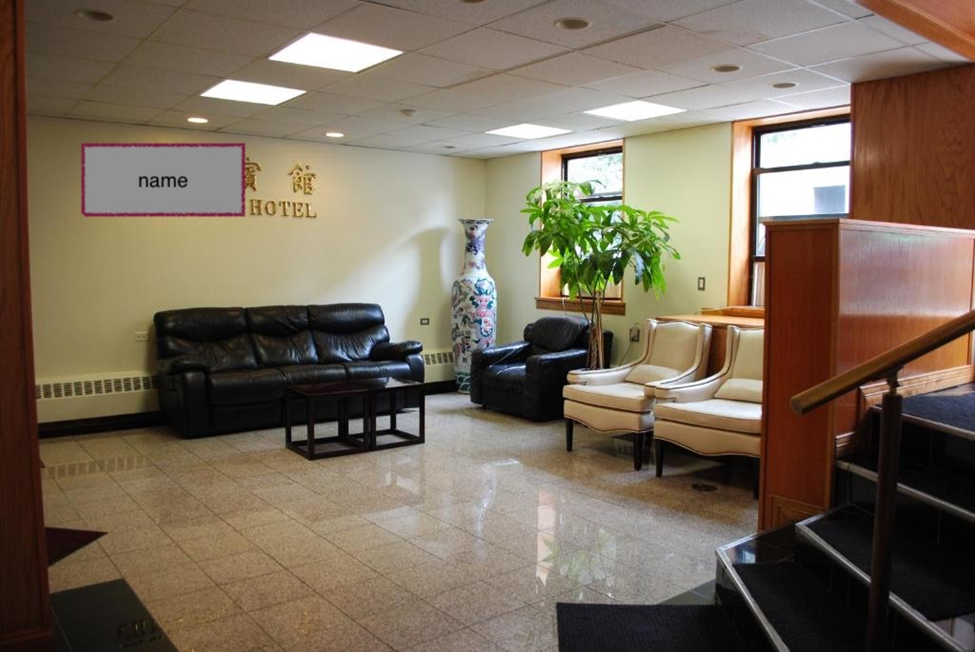
Hotels don’t speak in words — they speak in materials, lighting, layout, and smell. And sometimes, what they say is accidentally cold, unwelcoming, or just plain confusing. Today, we decode one very well-intentioned lobby that whispers “admin building” instead of “emotional sanctuary.” Let’s dive in, one soft chair and cold floor at a time.
1- Black Leather Couch Energy — A Missed Mood
- Theory: Affective Forecasting + Warm vs. Cold Materials
- Problem: Black leather = sleek, but in this context, it screams “dental waiting room.” It feels transactional, not transformational.
- Behavioral Effect: Guests unconsciously expect short stays, not deep comfort.
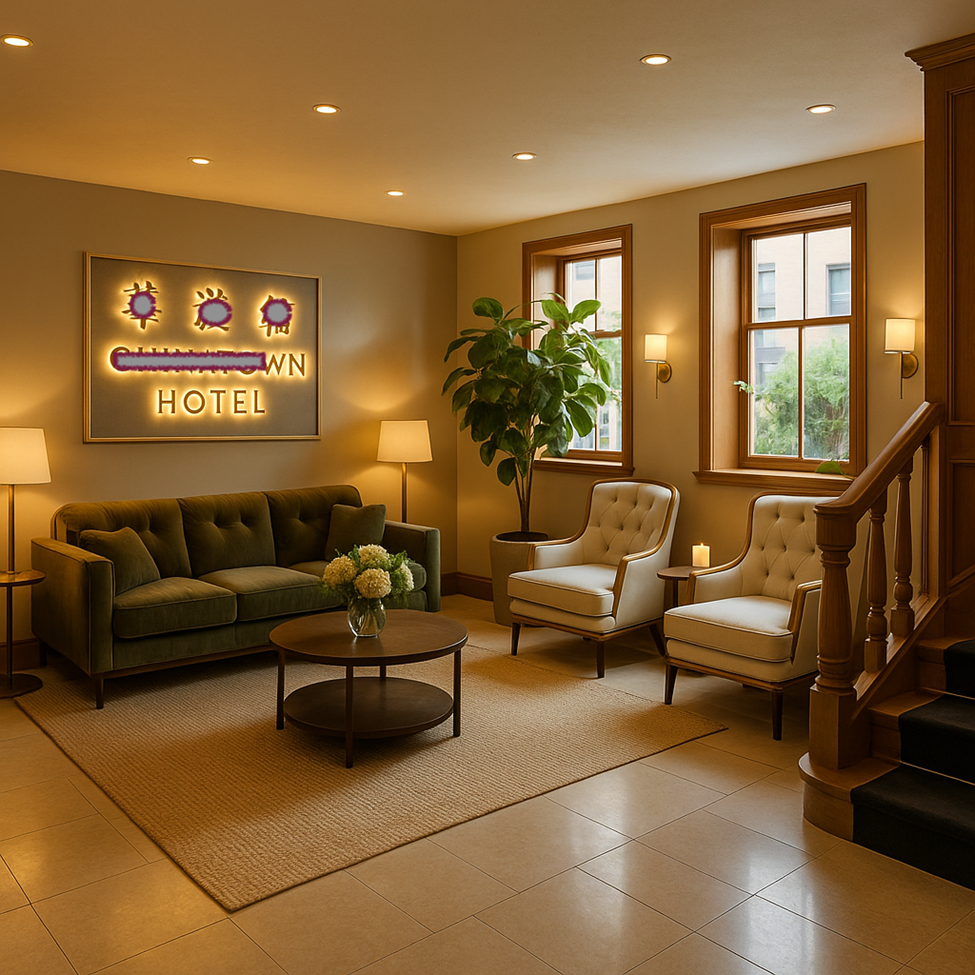
- Fix: Swap it for plush, textured seating in warm tones. Velvet is your friend. So is moss green.
2- Stone-Cold Greetings from the Floor
- Theory: Texture Priming + Cold Ambience Perception
- Problem: Glossy ceramic floors reflect light… and formality.
- Behavioral Effect: Guests feel like they should keep their coat on. It screams “don’t get too comfortable.”
- Fix: Layer with warm-toned rugs or natural materials like jute or wood-patterned LVT.
3. Logo on the Wall, Vibe in the Void
- Theory: Framing & Focal Point Theory
- Problem: A lonely golden logo on a plain wall is like a celebrity on stage with no spotlight.
- Behavioral Effect: No visual anchor = no brand memorability = no emotional connection.
- Fix: Add a frame, backlight, or contrasting panel. Make the logo a vibe, not just a label.
4. Tables with No Conversation Starters
- Theory: Priming Effect
- Problem: A bare table is a missed opportunity to spark emotion.
- Behavioral Effect: No flowers, no books, no candles = no reason to linger = no memory made.
- Fix: Add small sensory anchors: a single fresh flower, an art book, a tiny candle. Give the table something to say.
5. Too Much Shine, Not Enough Soul
- Theory: Congruence Theory + Sensory Mismatch
- Problem: Guests see a bright, empty space but paid for coziness.
- Behavioral Effect: Sensory conflict between price and experience = cognitive dissonance = regret risk.
- Fix: Match price to perceived comfort with layered lighting, subtle scent, or welcome gestures.
Beyond the Surface: What I Can’t Diagnose from a Photo (But You Better Believe I Track It On-Site)
Sometimes the real magic (or damage) happens in the things a photo can’t show. That’s where my deeper consulting kicks in — insights that need real-world data, guest flow, and sensory context. Here’s a peek behind the behavioral curtain:
Anchored Arrival Framing
- Theory: Framing Effect + Expectation Bias
- Why It Matters: The first 3 seconds after entry shape everything. But I need to know: what actually greets the guest? A hallway? A smile? An echo?
- What I Need: Full sensory entry path — sightline, sound, scent, interaction. This is how we prime the mind before it even processes price.
Price–Space Congruency Conflict
- Theory: Congruence Theory
- Why It Matters: €120/night shouldn’t feel like €80/daycare. If there’s a mismatch, even a great mattress can’t save the review.
- What I Need: Room layout, lighting tone, staff tone, air quality. Only then can I adjust perceived luxury with surgical precision.
Want these insights tailored to your hotel? Great. But fair warning: I don’t just review your chairs — I rewire how your space speaks to the brain.
In Conclusion: Your Lobby Should Whisper “Stay Forever,” Not “Sit Briefly”
This lobby has potential. The bones are there: symmetry, light, greenery. But by softening the materials, adding a few sensory whispers, and reframing focal points, you can turn polite silence into a warm hello.
Because a five-star experience starts with a five-second feeling
These are just my thoughts — take them or leave them, but your guests’ brains are already making up their minds.