Editorial analysis and illustrative design concepts. Images remain in their original sequence. Proposed changes are hypotheses to test, not verified client results or guaranteed returns.
Let’s be real: first impressions in restaurants don’t begin with the food. They start with the chair you sink into, the light you dine under, and the unconscious cues your brain picks up before the menu even lands on the table. Today, we’re going to roast (gently, with olive oil) one such space that had the right heart but the wrong heuristics.
Part I: What Was Going Wrong? (Behavioral Breakdown)
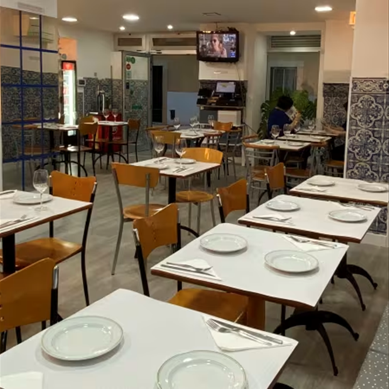
- Copy-Paste Table Layout
Theory: Visual Monotony & Habituation. If your tables are clones of one another, your guests’ brains stop noticing. That’s bad news for upsells or ambiance retention.
Real Example: The Sketch Gallery in London uses different chair colors and textures across zones to create micro-experiences. - TV In the Dining Zone = Cognitive Hijack
Theory: Salience Bias. Your brain cannot ignore moving images. It will focus on the TV over your food, your date, or your server’s special recommendation.
Real Example: Restaurants that removed visible TVs saw a 7-minute increase in average table time. - No Zones, No Emotion
Theory: Framing Effect. People respond differently to different environments. A solo diner needs different cues than a couple.
Real Example: Ottolenghi’s restaurants subtly vary music and table shape by time of day — brunch vs. dinner — and it affects order size. - No Scarcity, No FOMO
Theory: Scarcity Bias. People crave what might be unavailable. If everything is static, they won’t rush to try it.
Real Example: Restaurants with daily chalkboard menus report more upsells and more guest photos (free marketing!).
Part II: The €1000 Makeover That Changed the Game
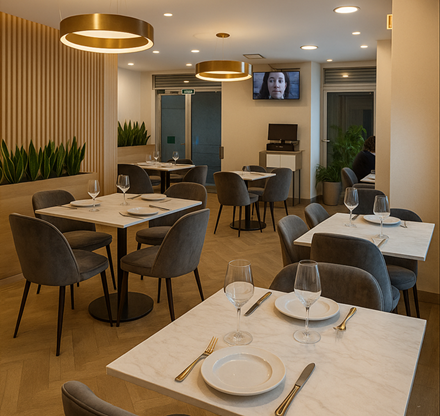
- Velvet Dining Chairs (12 pcs)
- Upgrade: From school metal to plush navy-blue velvet.
- Why: Price-Quality Heuristic. We perceive the food as higher-value when our seat feels expensive.
- Cost: ~€500–€660
- White Marble Contact Paper for Tables
- Upgrade: DIY-glam for the plain tabletops.
- Why: Visual Anchoring. Your brain sets expectations based on surface aesthetics.
- Cost: €60–€100
- Gold-Colored Cutlery
- Upgrade: From basic silverware to shine and elegance.
- Why: Luxury Cueing increases perceived worth of food.
- Cost: €50
- Pendant Lighting with Warm Hue
- Upgrade: Installed above tables for focused warmth.
- Why: Lighting Fluency boosts comfort, trust, and Instagram appeal.
- Cost: ~€135–€180
- Designer Plant Corners
- Upgrade: Created with mid-size leafy greens in ceramic planters.
- Why: Biophilia Effect slows breathing, increases stay-time.
- Cost: ~€100
- Wood-Texture Wall Panels
- Upgrade: Added warmth and acoustic dampening.
- Why: Environmental Coherence enhances emotional consistency.
- Cost: ~€100–€150
Estimated Total: €945–€1,140 (depending on your supplier, or how charming your negotiation skills are).
Finale: When Velvet Chairs Save the Day (But Don’t Save Your Budget)
Everything you just read? Crafted with love, laughter, and a calculator running out of battery.
So if this redesign triples your bookings? I accept applause. If it doesn’t? Well, maybe your playlist still sucks.
Either way — this was one fine ride from cafeteria chaos to velvet-backed victory. And if you want more where this came from? You know where to find me.
Until Next Spoonful,
Your Brain’s Favorite Consultant
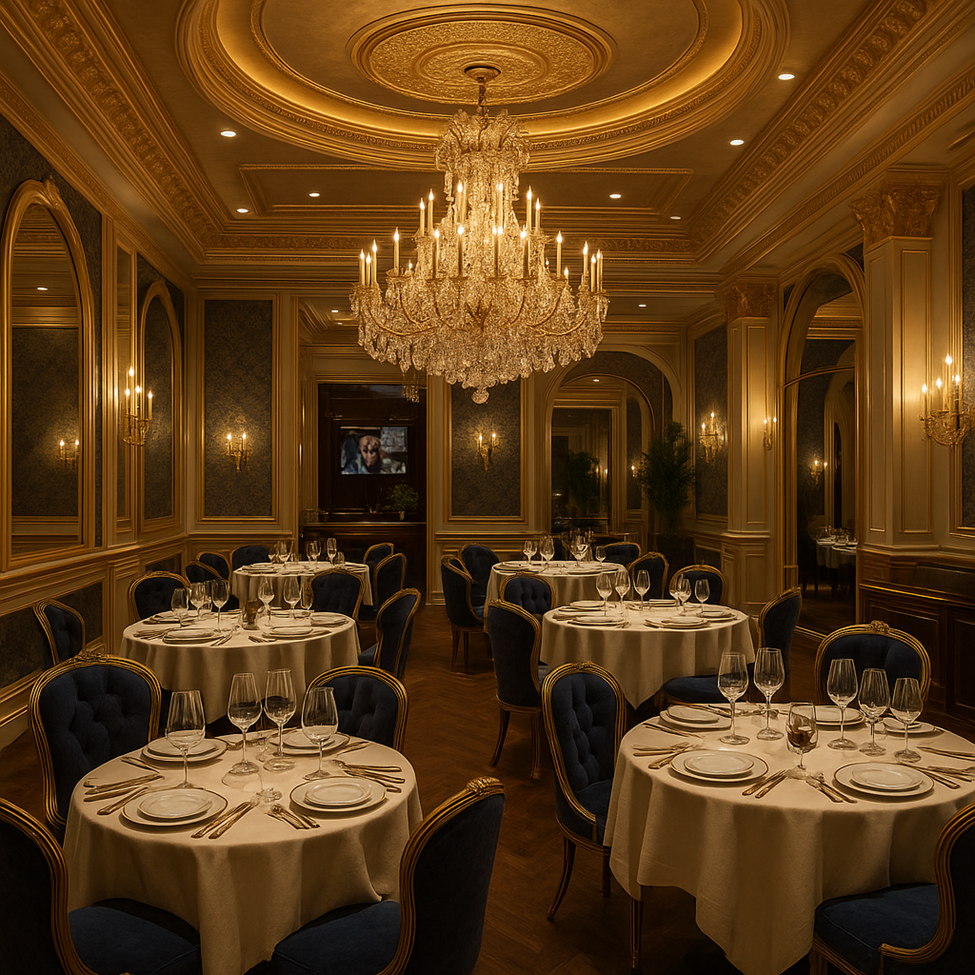
Also, this picture is as luxurious as our mind thinks ( consider it like an extra gift idea)!